Designing for Inversions, Cold Swings, and Cleaner Air
If you’ve spent any winter in the Salt Lake Valley, you know the pattern well: crisp blue skies one day, followed by a thick inversion the next. Pair that with dramatic temperature swings—sunny afternoons that feel mild, then overnight lows that plunge—and you get one of the more challenging climates to design for. We see these conditions not as limitations, but as design drivers—opportunities to create healthier, more resilient buildings that perform well no matter what the weather brings.
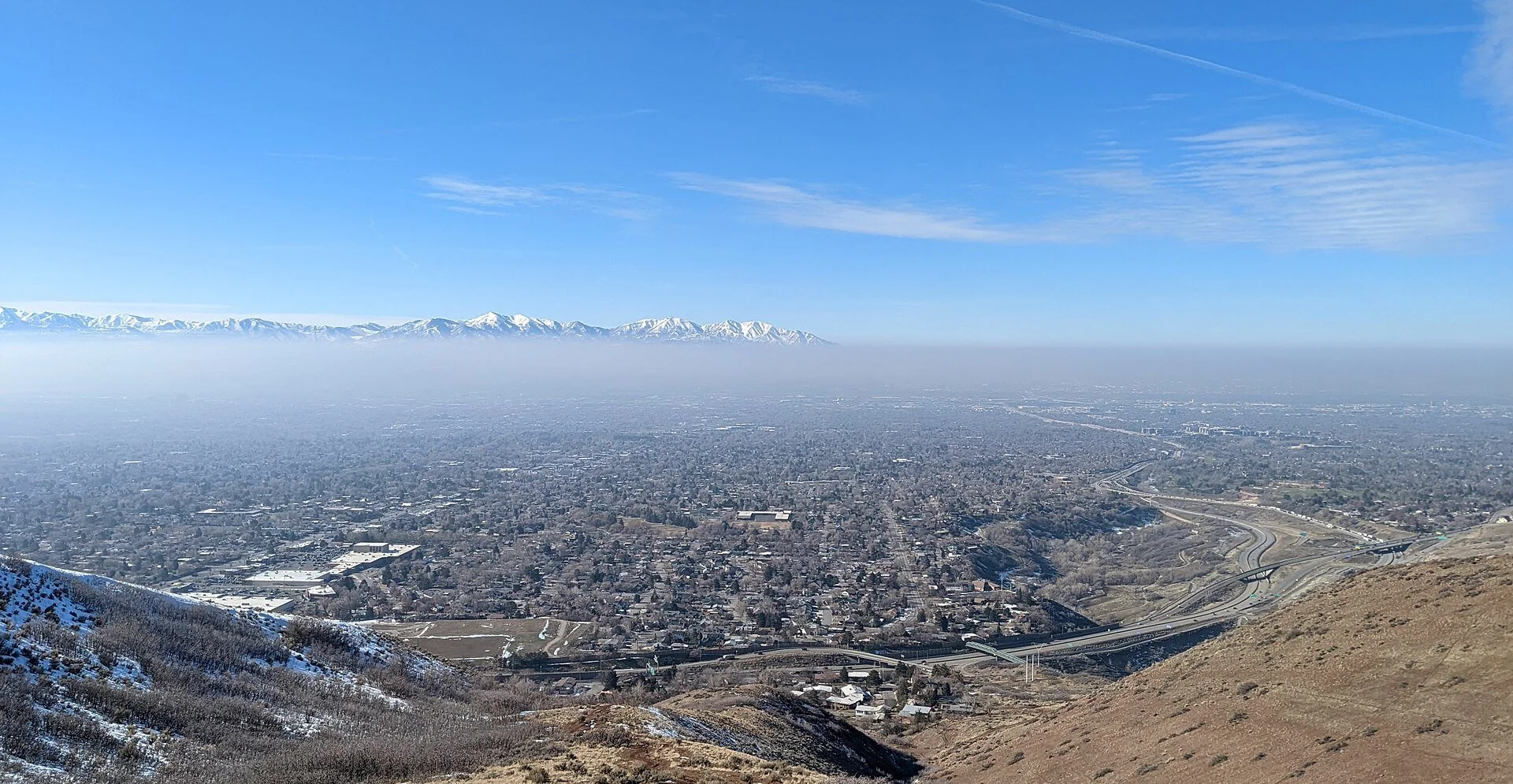
Inversion in the Salt Lake Valley trapping cold air and pollution. Image via Wikimedia Commons. CC BY-SA 4.0
Building for Clean Air During Inversion Season
Winter inversions trap pollutants close to the ground, making outdoor air quality a real concern for weeks at a time. While we can’t control the air outside, we can design buildings that protect the air inside.
Filtration-friendly design starts with intentional mechanical planning. High-efficiency HVAC systems paired with upgraded filtration—such as MERV 13 or higher—can significantly reduce indoor particulates during inversion events. Just as important is designing mechanical spaces with maintenance in mind. Filters that are easy to access and replace actually get changed, which directly impacts indoor air quality over time.
Tight building envelopes also play a role. By reducing uncontrolled air leakage, we limit the amount of polluted air seeping into living spaces. Balanced ventilation systems, like ERVs and HRVs, allow for fresh air exchange while filtering incoming air and retaining indoor comfort—an especially smart solution during prolonged inversion periods.
Insulation That Holds Up When Temperatures Swing
Utah winters aren’t just cold—they’re unpredictable. A home might experience a 40-degree temperature swing within a single day. Proper insulation isn’t just about surviving the coldest night; it’s about maintaining consistent interior comfort through constant change.
High-performance insulation strategies—continuous exterior insulation, well-detailed wall assemblies, and thermally broken connections—help stabilize indoor temperatures and reduce reliance on mechanical heating. When combined with airtight construction, these strategies keep warm air inside when temperatures dip and prevent heat gain when the sun breaks through the inversion layer.
We also pay close attention to roofs and foundations, which are often overlooked sources of heat loss. Thoughtful insulation detailing in these areas can make the difference between a home that feels drafty and one that feels solid and calm, even on the coldest days of the year.
Designing for Health, Comfort, and Resilience
Designing for inversions and cold swings isn’t about chasing trends—it’s about responding intelligently to place. In the Salt Lake Valley, that means prioritizing indoor air quality, thermal stability, and long-term performance.
At Uncommon Architects, we believe good design should quietly support daily life, even when the environment outside is less forgiving. By integrating clean-air strategies and robust insulation into the core of our designs, we create spaces that feel healthier, warmer, and more resilient—season after season.
If you’re thinking about building or renovating in Utah, we’re ready to partner. Winter is a powerful reminder: the best buildings don’t fight the climate, they’re designed with it in mind.