
Designing Cultural Institutions Part Two: Theaters
Theaters are among the most complex buildings architects design. Every surface, angle, and material affects how audiences see, hear, and feel a performance. Behind the scenes, a theater’s hidden spaces work just as hard as its public ones.
Here’s what goes into designing spaces where storytelling comes alive.
Acoustics: The Invisible Architecture
In a theater, sound isn’t just another design element—it’s the foundation. The room must deliver clarity whether it’s a solo violin, a full orchestra, or amplified dialogue.
Architects and acoustic engineers work together to shape the auditorium for optimal sound dispersion; use diffusers, reflectors, and absorptive panels strategically; isolate the hall from vibration (urban noise, HVAC systems, footsteps); and tune the room using adjustable acoustic elements.
The Art of Sightlines
Every audience member deserves an unobstructed view. Achieving this at scale takes precision. To achieve this, architects consider rake angles for rows, balcony positioning, distance from stage to back row, ADA-accessible seating integrated without compromising views, and comfortable seating geometry for long performances.
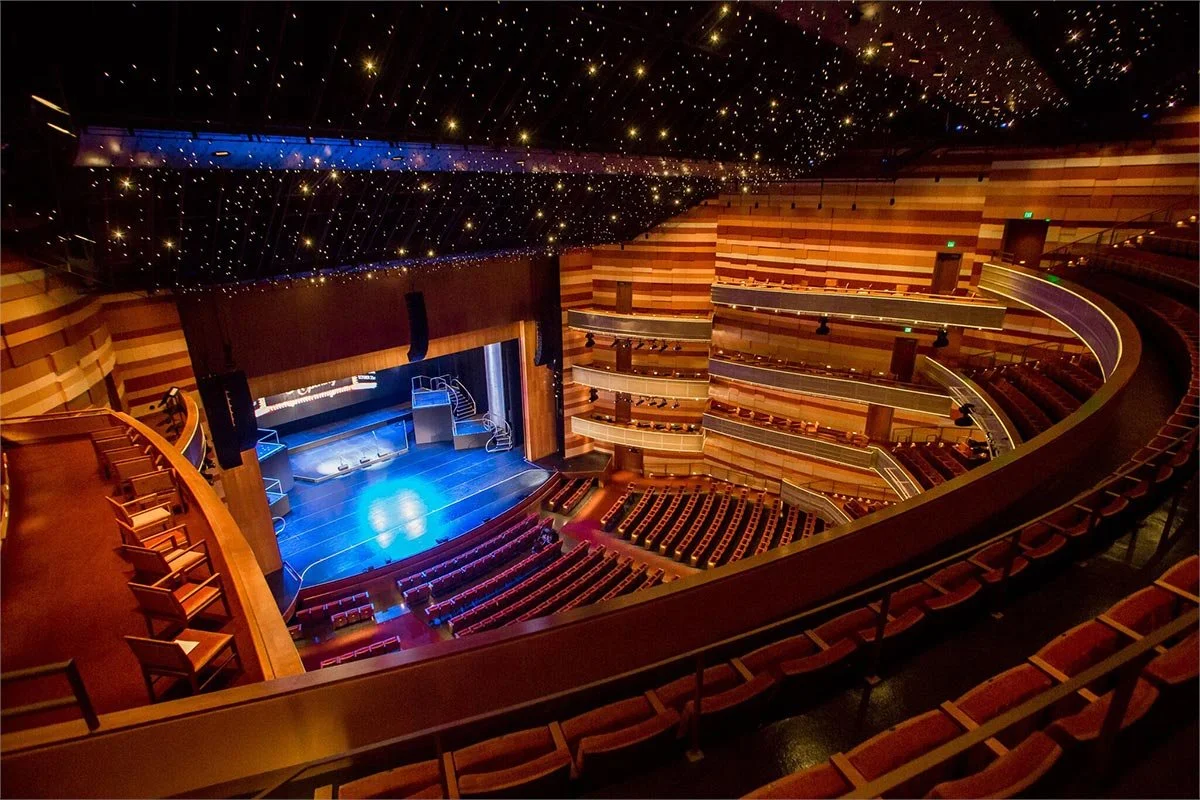
George S. and Dolores Doré Eccles Theater in Salt Lake City, Utah. Image via Salt Lake County Arts & Culture. Terraced seating and multiple balconies create intimacy while maintaining visibility, even in a large house.
Stage + Backstage Logistics
The backstage areas define how a theater functions. Efficient circulation behind the scenes can elevate a performance just as much as what happens under the spotlight. Design priorities include fly towers tall enough to store scenery, wide wings for large productions, trap rooms for stagecraft, performer-ready dressing rooms, and loading docks large enough for touring shows.
Technology That Adapts Over Time
Theaters must evolve with rapidly changing performance technology, so architects plan for long-term adaptability. Smart theater design includes concealed catwalks and lighting bridges, easily accessible rigging and power systems, ventilated projection rooms, and AV infrastructure routed discreetly but accessibly.
Flexibility ensures the architecture remains relevant for decades of performance trends.
Front-of-House Experience
The audience’s journey begins the moment they step inside. This includes ensuring these spaces have spacious, welcoming lobbies, clear wayfinding and signage that avoids congestion, integrated bars, lounges, and social zones, and architectural elements that build anticipation as guests move from entrance to aisle.
Closing Thought
Theaters succeed when architecture disappears into the experience. When acoustics, visibility, comfort, and backstage choreography work in harmony, the storytelling shines—and audiences return again and again.
In part three, we’ll finish the series with an exploration of galleries and put their key architectural and design features on display.
If you are ready to start your next project, so are we! Whether it’s a theater, institutional space, or even your dream home, get in touch and let’s partner together to bring the space to life.
