
How Architecture is Shaping Flexible, Collaborative Co-Working Spaces
In the past decade, co-working spaces have gone from a niche concept to a cornerstone of modern work culture. What began as shared desks for freelancers has transformed into dynamic environments that accommodate startups, remote teams, and even enterprise offices. Thoughtful design isn’t just about aesthetics — it’s about fostering connection, productivity, and flexibility. In this post, we’ll explore the latest trends in co-working architecture and what it takes to design spaces that truly support the way people work today.
The Rise of Co-Working: Why Design Matters
Co-working isn’t just real estate; it’s a social and professional ecosystem. From freelancers to distributed corporate teams, people choose co-working spaces for community, convenience, and creativity. But without intentional design, these benefits can fall flat. Architecture plays a critical role in shaping user experience, balancing openness with privacy, and creating environments that feel both energizing and welcoming.
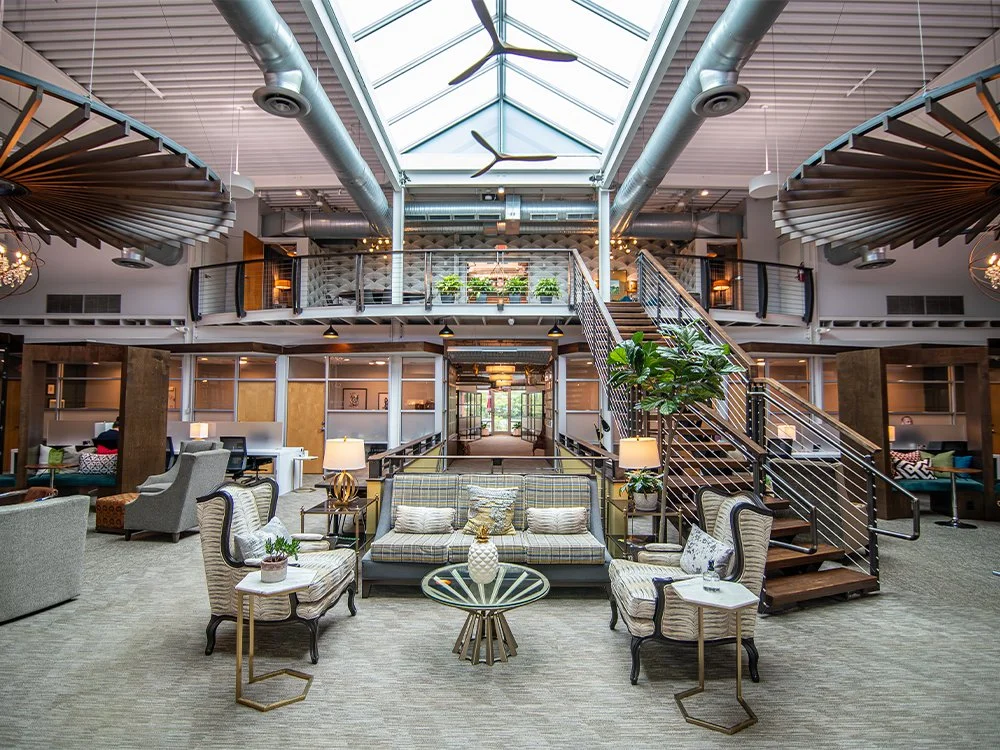
A welcoming lobby brings life to this co-working environment and breaks up the cubicle-farm. This file is licensed under CC0 1.0 Universal.
Trend 1: Flexible and Adaptable Layouts
Flexibility is at the core of successful co-working design. Instead of rigid floor plans, today’s spaces rely on modular systems that allow users to shape their environment as needs change. Movable furniture, adjustable workstations, and operable partitions make it easy to shift from solo work to group collaboration without disrupting the overall flow of the space. This adaptability extends the life of the workspace and ensures it can evolve alongside its users.
Trend 2: Zoning for Focus and Collaboration
Modern co-working spaces are designed with intention, creating clear zones that support different modes of work. Open collaboration areas encourage spontaneous interaction and teamwork, while quieter zones provide acoustically controlled environments for focused, heads-down work. Private meeting rooms and phone booths add another layer of flexibility, offering spaces for confidential conversations or virtual meetings. Thoughtful architectural cues — such as changes in lighting, ceiling height, or materiality — help users intuitively understand how each area is meant to function.
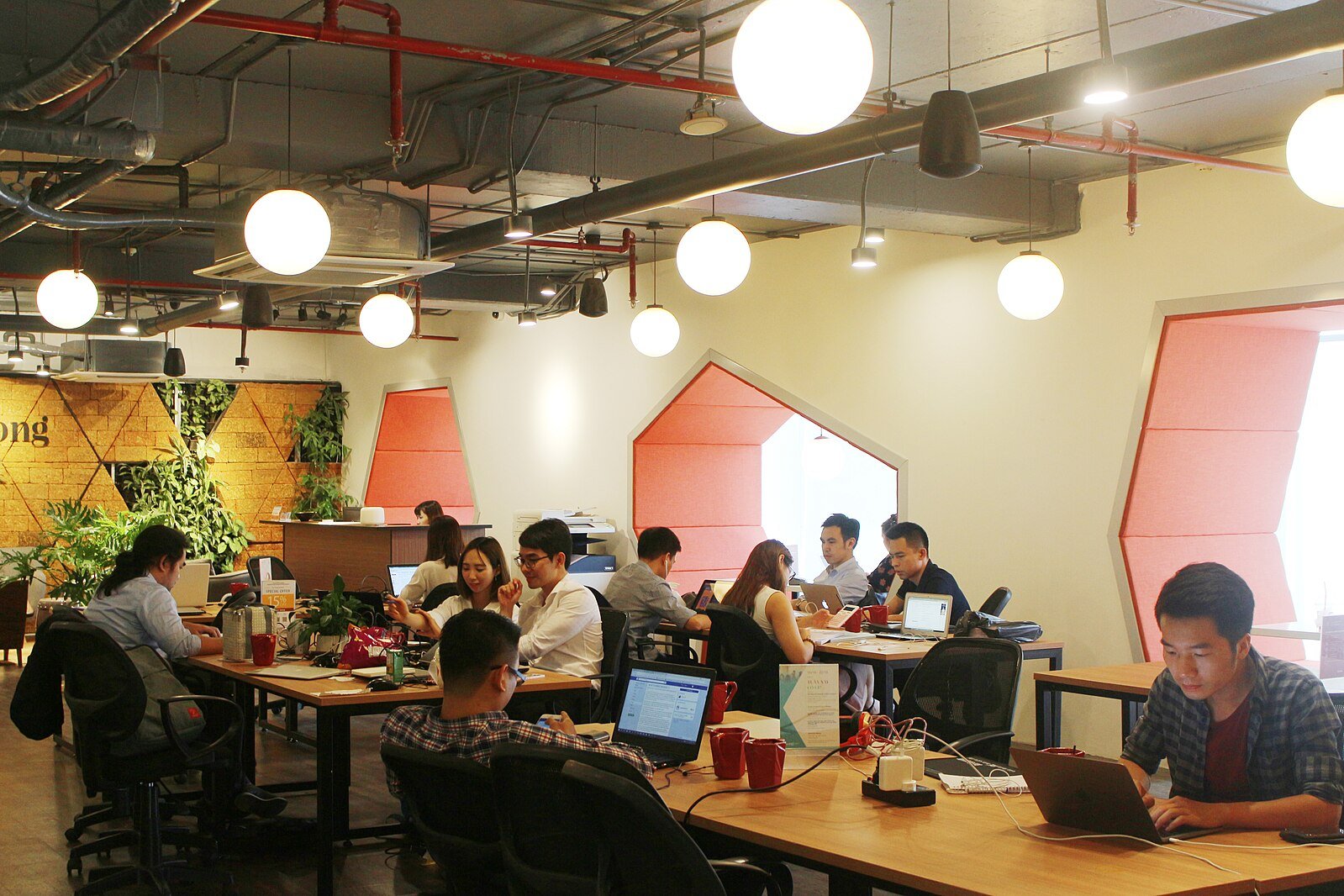
A bright, modern approach to co-working design. This file is licensed under CC BY-SA 4.0.
Trend 3: Human-Centered Materials and Biophilic Design
As work becomes increasingly digital, the physical environment plays a larger role in supporting well-being. Human-centered design prioritizes natural light, comfortable materials, and visual connections to nature. Incorporating wood, stone, greenery, and warm textures creates spaces that feel grounded rather than institutional. These biophilic elements have been shown to improve focus, reduce stress, and enhance overall satisfaction — key factors in the long-term success of any co-working environment.
Trend 4: Technology That Supports, Not Distracts
Technology is essential in co-working spaces, but the best designs integrate it seamlessly. High-speed connectivity, flexible power access, and intuitive audiovisual systems allow users to work efficiently without friction. Conference rooms and shared spaces are increasingly equipped for hybrid collaboration, supporting both in-person and remote participants. When technology is thoughtfully embedded into the architecture, it enhances productivity while remaining largely invisible.
Trend 5: Spaces Rooted in Local Culture and Identity
The most compelling co-working spaces avoid a generic, one-size-fits-all feel. Instead, they reflect the character of their community through material choices, artwork, and spatial storytelling. Drawing from local culture, history, or landscape helps create a sense of place that resonates with users. This connection to the surrounding environment fosters belonging and transforms the workspace from a temporary stop into a meaningful destination.
Making It Work: What to Consider Before You Build
If you’re exploring co-working design, it’s important to define a clear vision early in the process. Understanding who the space is for, how it will be used, and how it might change over time helps guide smarter design decisions. Balancing flexibility with identity, and openness with privacy, ensures the finished space is both functional and distinctive.
Why It All Matters
Co-working spaces are more than shared offices — they’re environments that influence how people connect, collaborate, and grow. When architecture is thoughtfully considered, these spaces can support productivity, encourage community, and adapt to an ever-changing workplace. At Uncommon Architects, we design co-working environments that are flexible, human-centered, and built to last.
Ready to Design Your Co-Working Space? Whether you’re launching a new co-working venture or reimagining an existing space, we’d love to help. Contact us anytime to start the conversation.
